Why does my Autistic daughter wake up angry nearly every single morning?
Ideas on navigating the Morning storm with my demand avoidant daughter

Hey there, sorry I’ve been absent. I’ve been super busy building our TikTok : we are building an amazing community with nearly 30,000 followers. Why don’t you join us?
Tiktok @jemspeakslife
If you’d prefer to listen to this blog, please go to my YouTube here:
Don’t forget to like and subscribe! It really does help the reach of the content to get in front of the right mums and dads who need to know they aren’t alone.
So, Morning Storms
Does anyone else wonder why autistic children with demand avoidance wake up angry, kicking, screaming, whining? What happened overnight?
I used to say to my wife, and still do, how many times can our child wake up from a nightmare?
Because honestly, that seems like the only rational explanation sometimes.
And today was no exception. Unfortunately.
It is stressful. Really really stressful. Before I have even opened my eyes, I hear shouting. Something is already happening.
That is how I woke up. No coffee. No breakfast. No nothing. Just straight into a war zone.

What is Going On
What is happening in the brains of our demand avoidant children?
I am not an expert. I am just sharing what I have observed over the past few years.
But I can tell you this. My daughter is waking up stressed out
And I do not get it. Why would she?
She is in a warm bed, snuggled next to her mum. Safe. Loved. There is no obvious threat.
So what is the crisis?
The Elastic Band Metaphor
My thinking has evolved. So has the way I manage mornings. It does not mean I have fixed it but it has helped stop things from getting worse.
Here is a metaphor I use. Elastic band
Ruby’s elastic band is already stretched most mornings. Tight and tense.
It does not take much to flick it. Just a little trigger and boing off she goes.
Cortisol and Waking Up
Let us start with cortisol. The stress hormone.
Everyone produces it. Neurotypical. Neurodivergent. All of us.
It spikes in the morning as part of what is called the Cortisol Awakening Response
It is nature’s nudge to get us moving. Time to go
For most people it helps us feel alert. It gets the engine running.
But for PDA which stands for Pathological Demand Avoidance brains
Cortisol does not feel like alertness. It feels like danger
That same spike gets interpreted differently.
You might wake up and think. Time to feed the cats or I have got to get to work.
But in my daughter’s brain it might be
Why is no one in the room
Why is Mum hugging one of the other kids
Something is wrong
I am not safe
It is not the hormone itself. It is the meaning her brain attaches to the physical sensation.
She wakes up already in fight or flight. And as mums and dads we do not know why. And neither does she.
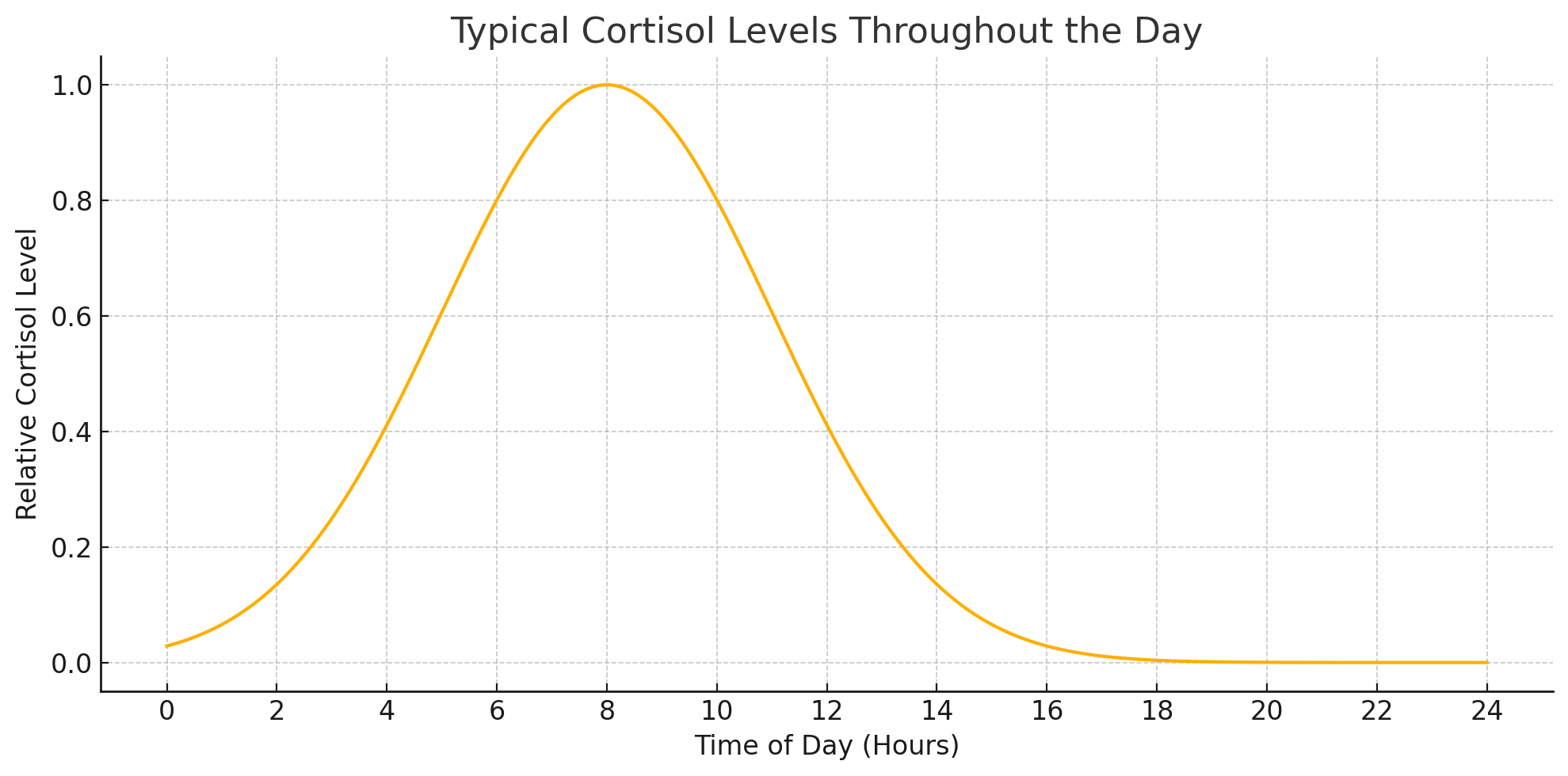
Same Trigger Different Reaction
Cortisol is like the engine starting for most of us.
For Ruby it is like a fire alarm
Same trigger. Completely different response.
As parents we need to understand this.
Because the more we understand the more desire we have to slow things down, regulate ourselves and find ways to help them regulate.
Our children may be interpreting safety signals as stress signals
Is This Proven
Well here is what I have found
There are no large scale studies specifically on PDA and cortisol. PDA is still not well understood.
You do not get a standalone PDA diagnosis. It is usually noted as an autism diagnosis with a demand avoidance profile.
But studies do show that many autistic children have
Elevated baseline cortisol
Atypical cortisol rhythms meaning that usual daily drop off does not happen the same way
There is also research into school stress, transitions and how cortisol affects behaviour and functioning in autistic children.
Experts like Dr Mona Delahooke and Dr Ross Greene describe children like ours as having nervous systems stuck in high alert. Like a switch that is permanently flipped to fight or flight mode even when there is no real threat.
So while cortisol is not the full story, it is a very big clue.
Back to Ruby. Back to the Storm
What do we actually do in the eye of the storm.
First rule. Do not correct
I Do not say:
Stop it
Why are you always like this
Can you not just wake up happy
Look at your siblings
We used to say those things and it only made things worse.
I keep coming back to the quote I have on my wall
A dysregulated adult cannot help a dysregulated child
So I have conversations with myself before bed. I do my journaling (most days).
I tell myself. Be ready to breathe in the morning
Don’t loose your shit.
When the alarm bell rings and Ruby is upset, I focus on regulating myself first.
Strategy Mode
Lower your voice. I speak softly and get to her level
Mirror calm. I want her to feel the calm I am trying to create. It does not always work but it never makes it worse
Do not pull her out of bed. That sense of urgency makes things escalate quickly.
Urgency is the enemy of demand avoidance
Get Somatic
Sometimes gentle physical touch helps. Stroking her arm, hair or back
Not when she is in full meltdown mode but when she is just irritated, it can help ground her
Offer Choices
Redirect with choices instead of commands
This morning my wife asked
Do you want cereal or toast
It sounds simple but it shifts her thinking
Her eyes move, she processes the question and she chooses
Suddenly she is out of emotional reactivity and into decision making mode
Children with demand avoidance need control so we give options, not instructions
Examples
Would you like milk upstairs or downstairs
Do you want to feed the cats or pour your cereal
Space and Validation
Sometimes the best thing to say is
It is okay. I can see you are upset. You have got space here. Big bed just for you
The message behind the words is
You are not being rushed. I am not making this a transaction
After the Storm
Once the storm has passed we sometimes have restorative conversations
I have asked Ruby things like
If your toy hippo wanted to wake up happy, what would he need
She gives me little clues
Mum nearby
Not too hot, that is why we got air conditioning for her room
We also roleplay. I pretend to wake up grumpy. Ruby then plays the caring one
“Daddy you are safe. You just need a cuddle”
It is a work in progress but as she gets older her self awareness grows.
These reflective conversations are becoming more valuable

Final Thoughts
There is no silver bullet
It is like taking a photo of the ocean. Take one a second later and none of the waves are in the same place, our children are growing, changing, things don’t stay in one place.
But I want one thing to remain consistent and be the calm she needs…and of course, it’s impossible to be perfect. But I persist.
Thank you for reading. Wishing you a peaceful day ahead
Thanks for reading My Ruby Cube - Helping my daughter with Demand Avoidance! Subscribe for free to receive new posts and support my work.